Training the brain to be a better drawer
Drawing is the base of many good works of illustrations that you may see. It serves to capture the essence of the illustration, to guide people on how to apply paint. But for many who wish to undertake that process it is often difficult to grasp the volumes of the form. Even when you study how to become a better drawer, the results will often vary between different people. The brain subconsciously may not be able to see and comprehend the volumes and flow of a potential composition when making the first marks on the paper. You can look at various drawing tutorials online but if the brain cannot internalize the knowledge and come up with solutions on its own then it is a waste of time.
Going Forward
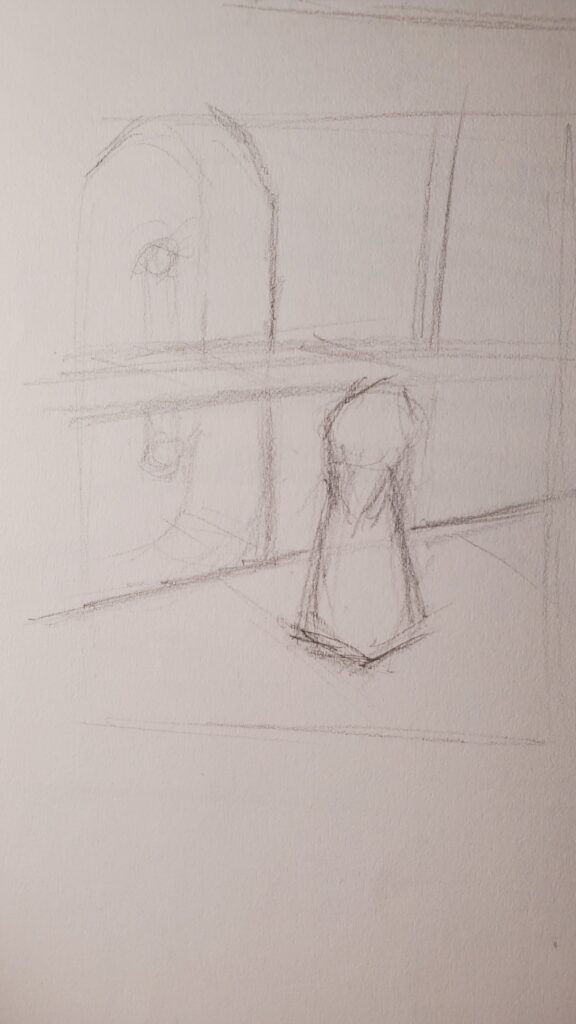
We can start nudging our brains to be better drawers by doing a series of exercises. Start with a piece of paper, and three pencils with different shades, no erasers are needed. Next, we start marking out boxes on the paper that will be the area we want to draw in. These boxes need to be small enough that it would be used for a thumbnail. Then we simply begin drawing what comes to our mind with the lightest pencil using the lightest strokes. If you make a mistake with your mark, don’t erase it, simply make a more complete mark. Once you are sure that your drawing is on the right path you can then use a darker pencil to carve out the shapes. Your brain will subconsciously filter out the lighter strokes made when it is next to a darker stroke. An example of this in action can be seen below.
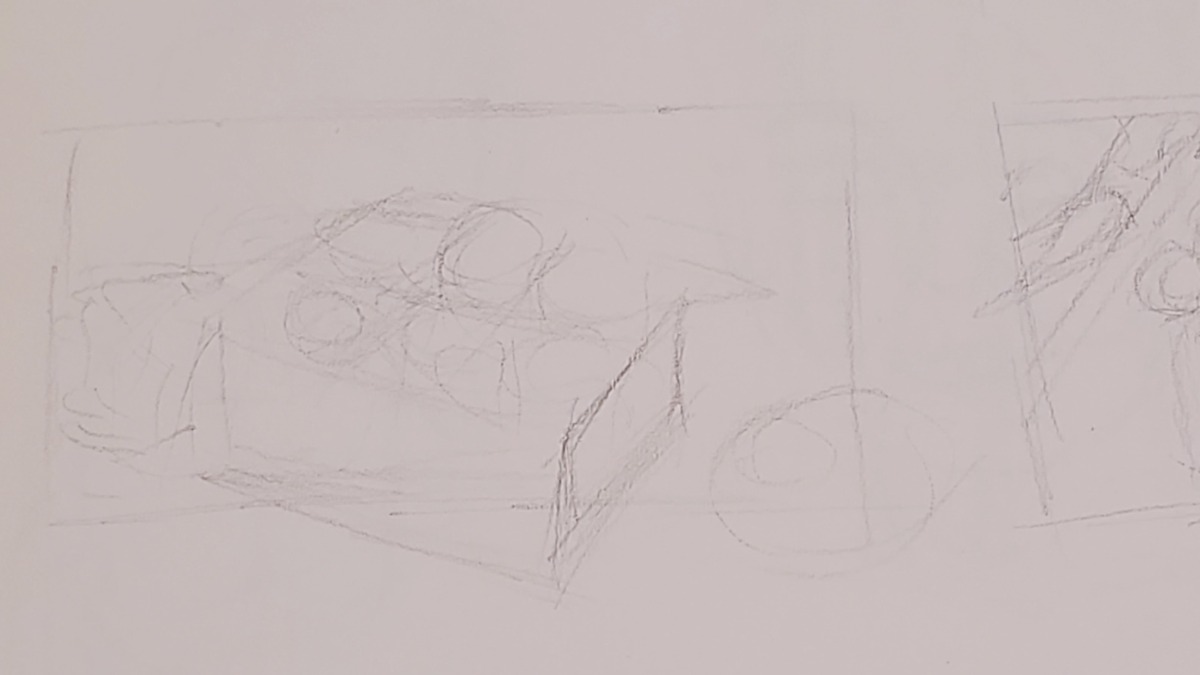
I have gone out of my way to make very light marks on the paper to slowly move toward the image that I have envisioned.
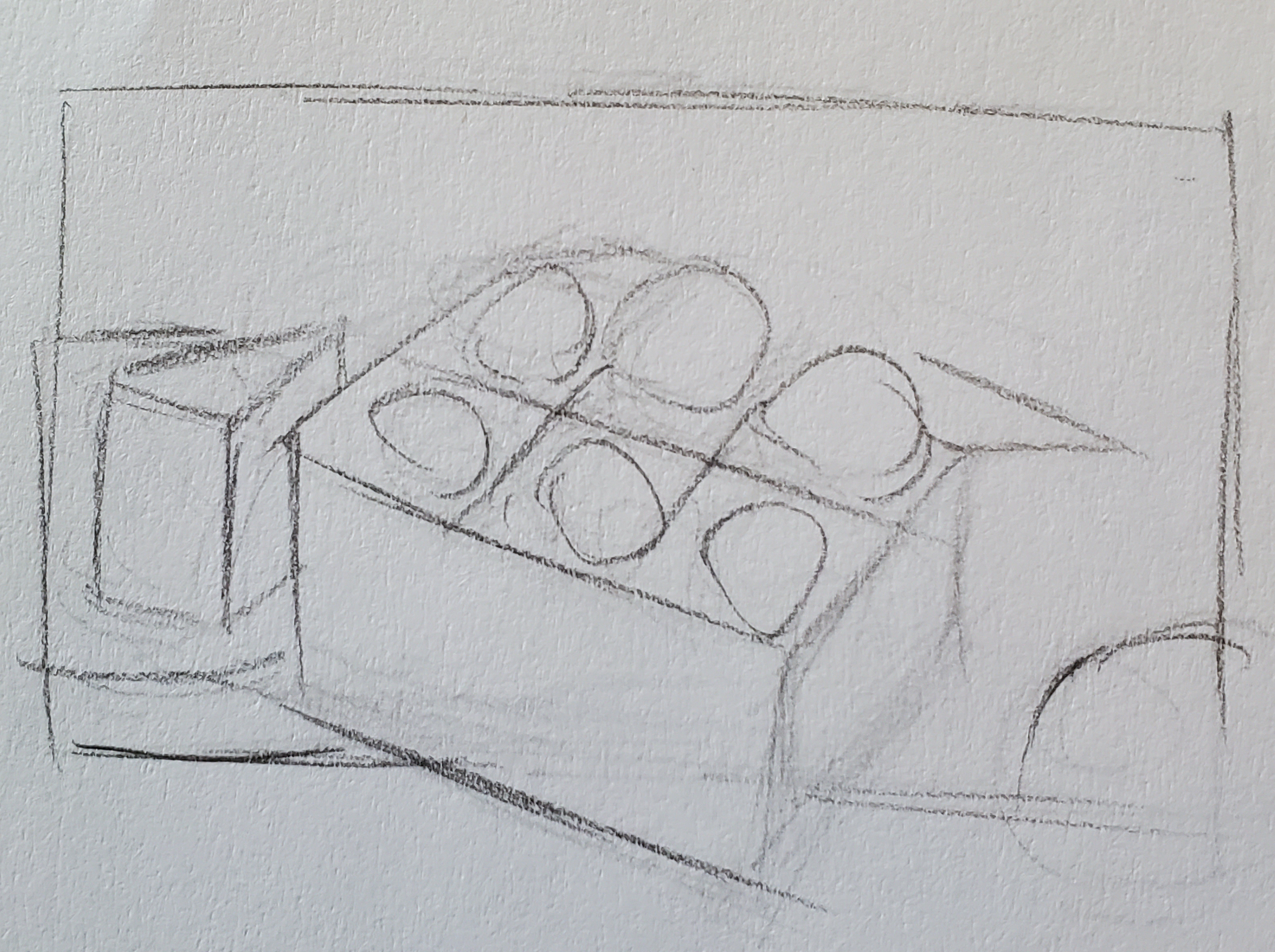
Knowing that mistakes cannot be undo only lessened, you are forcing yourself to slow down and make more deliberate strokes. When you are forcing yourself to draw within the small box it is easy to see the composition of the whole drawing. It will be easier to deduce where everything is supposed to be relative to each other. Take this landscape sketch that I have done with this method as an example.
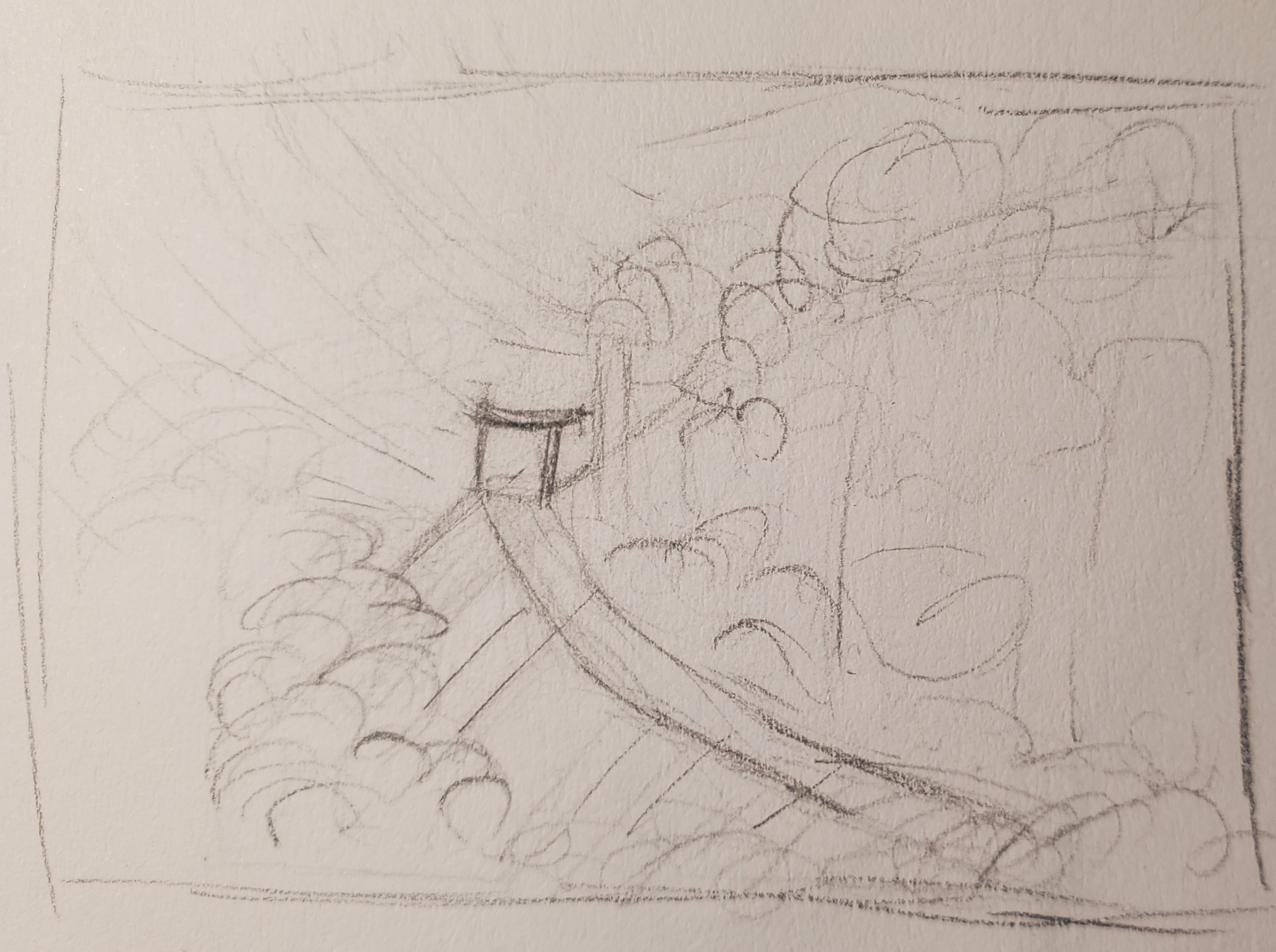
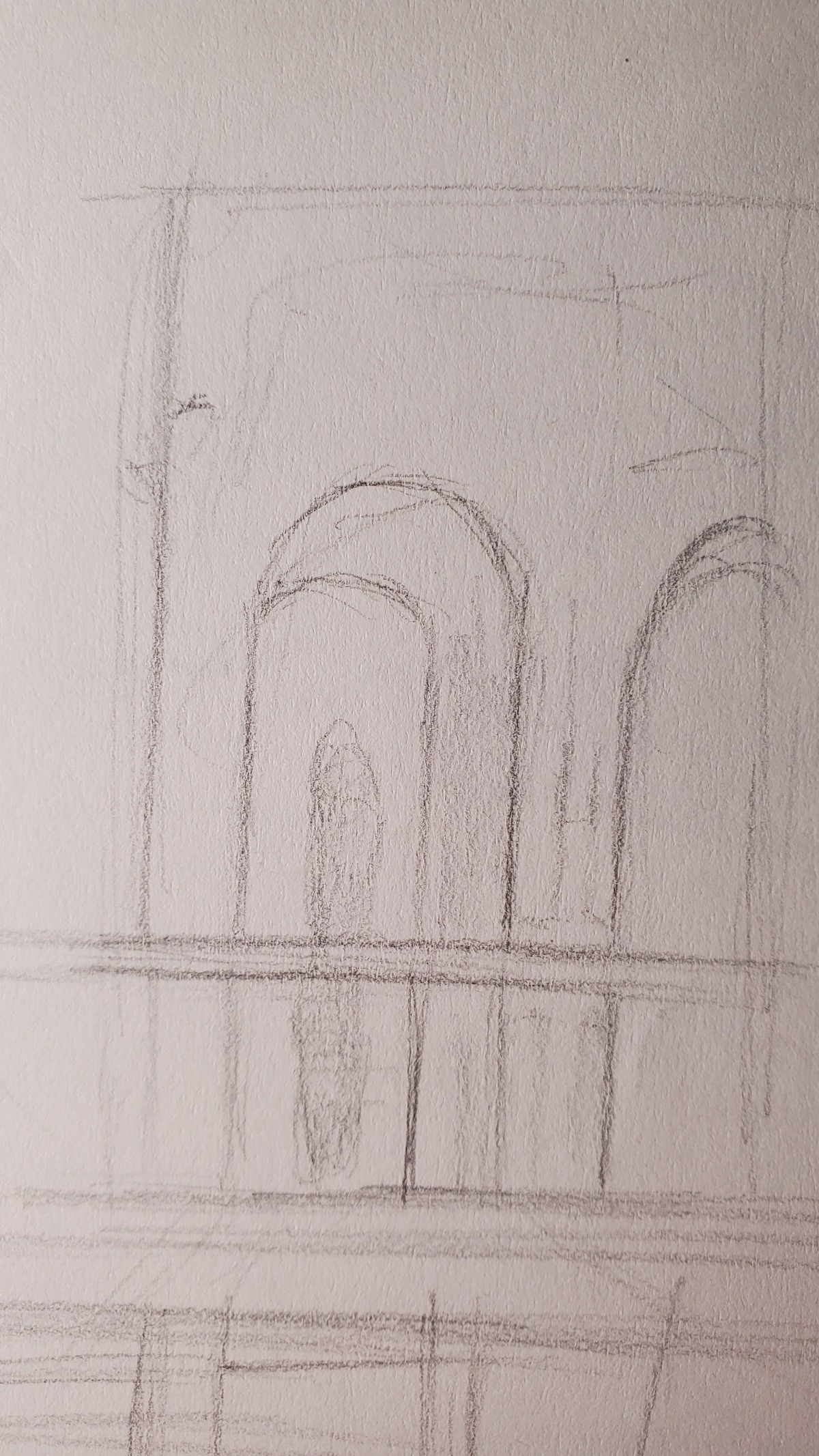
I have made light marks initially to move forward with the image. Then I began to make darker marks to draw attention to the road leading the gate. Some simple C curves were made to populate the area with foliage. Another example include making sketch around studying water reflections.
Conclusion
It does not have to be perfect; it can be done alongside your art path of becoming a better drawer. The imperfection of this process will force you to understand what you are studying so you can make up the difference.